

OEE Data Accuracy: How to Fix Faulty Shopfloor Metrics
Is your facility's 78% Overall Equipment Effectiveness (OEE) score actually accurate? While the mathematical formula might be executed perfectly by your software, the numbers feeding it are often fundamentally flawed due to unverified data inputs.
Achieving true OEE data accuracy requires moving away from manual paper logs and addressing unclassified downtime, incorrect cycle times, and operator bias. According to Lean Manufacturing principles, an honest OEE metric acts as an operational mirror, if the data collection process is broken, management will inevitably make strategic decisions based on a false reality.
Why Is Your OEE Metric Lying to You?
When evaluating production efficiency, Overall Equipment Effectiveness stands as the definitive global standard. The industry universally recognizes specific performance benchmarks to evaluate competitiveness:
- 100% OEE: An unattainable theoretical ideal representing zero losses.
- Above 85% OEE: Considered World-Class Manufacturing status.
- Below 60% OEE: Indicates significant operational capacity for improvement.
However, these benchmarks are completely useless if the underlying shopfloor data collection lacks integrity. The core issue is almost never the math itself.
The standard mathematical framework is structurally sound:

The 3-Step Investigation for True Line Diagnostics
To uncover the ground truth of your production lines, do not start with the final percentage. Instead, follow a structured investigation based on ISA-95 framework principles to reduce operational variables.
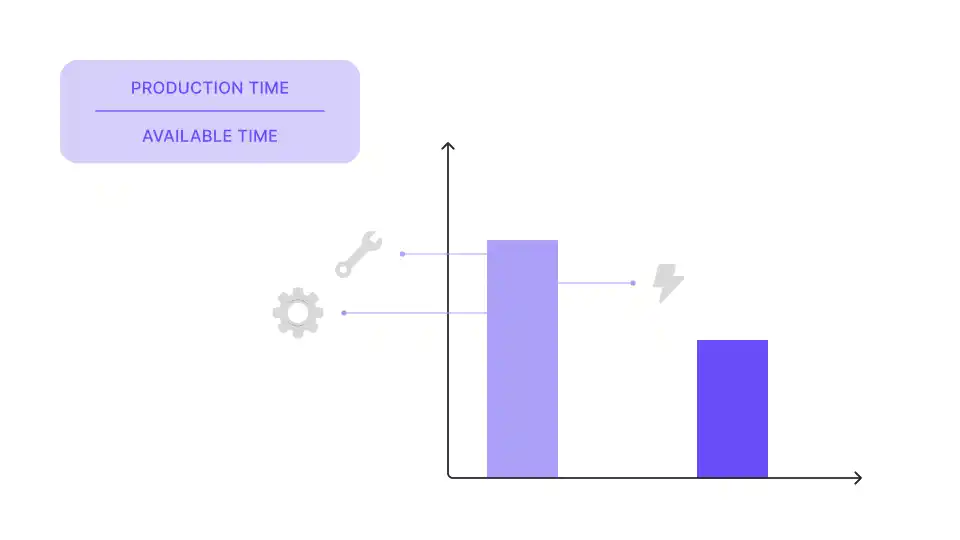
1. Was the Asset Programmed to Run?
Determine the exact boundaries between planned operational time and scheduled shutdowns. If your asset availability parameters are incorrectly configured within your system, your entire baseline calculation shifts.
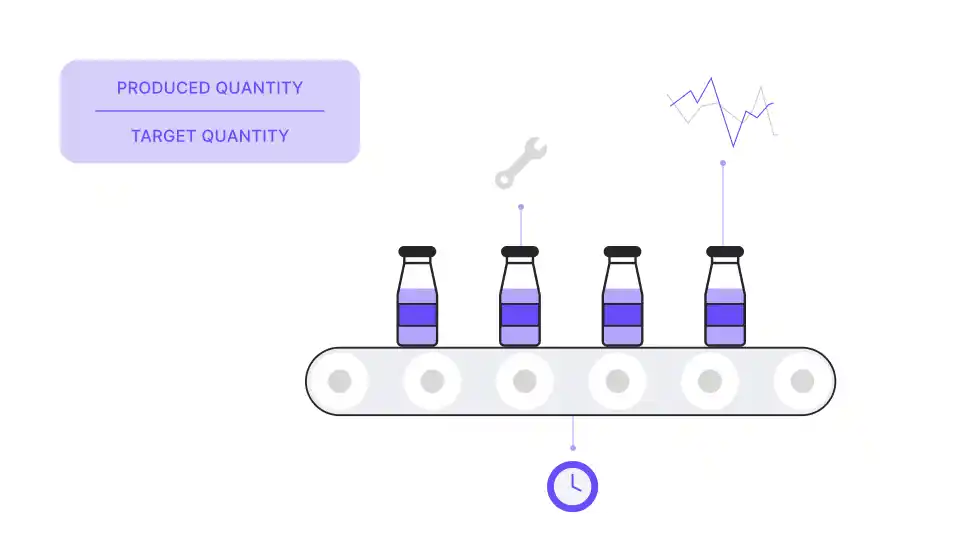
2. Did the Line Operate at the Target Cadence?
Analyze whether the equipment maintained its designated engineering speed during active run times. This step isolates performance losses from hidden micro-stoppages that PLC systems might catch but operators fail to log.
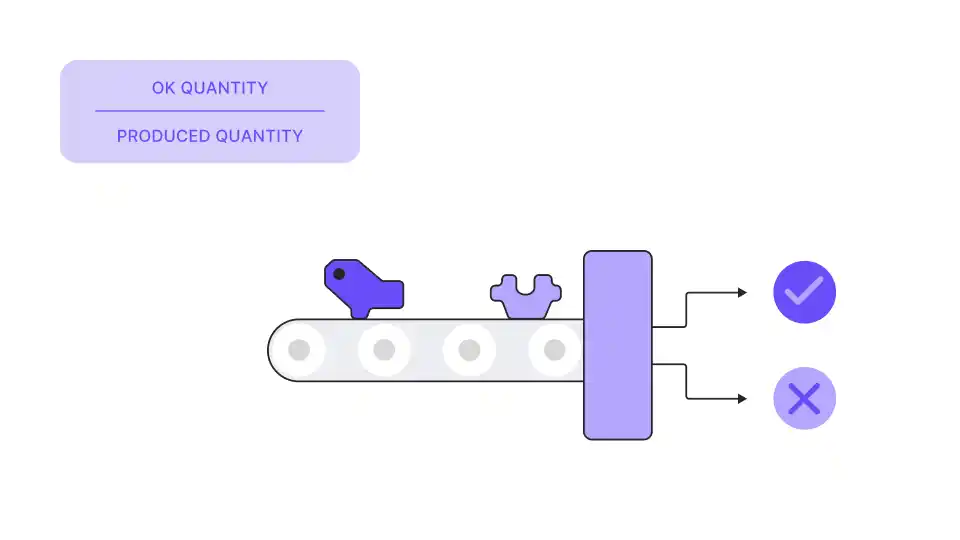
3. Did the Process Generate Compliant Units First Time Through?
Verify the ratio of good parts against total units produced. Reworked parts must be tracked rigorously, as misclassifying salvaged units distorts the true quality metric.
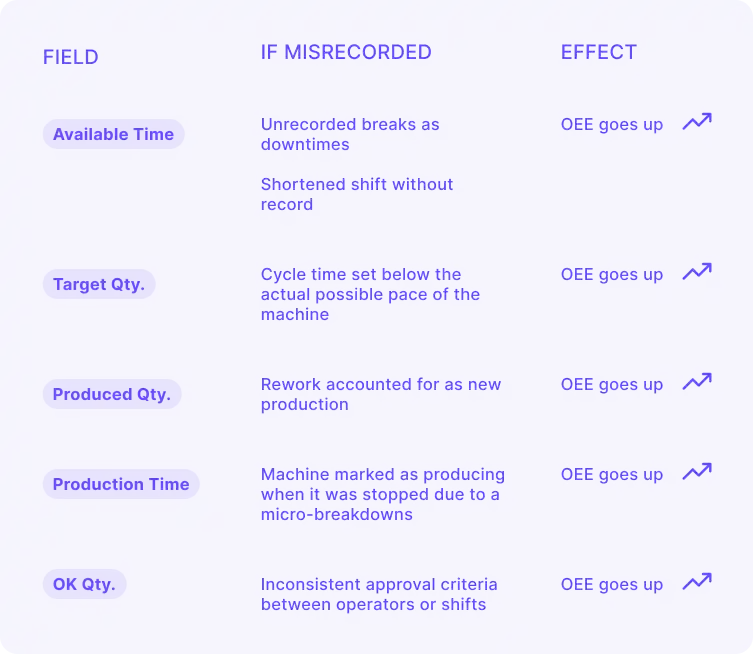
5 Hidden Fields That Nobody Monitors (And Should)
Each denominator in the formula is a lever. Not in the sense of fraud, but in the sense that innocent logging decisions have a direct impact on the final number.
How Automated Data Capture Resolves the Integrity Gap?
To achieve flawless real-time OEE monitoring, factories must transition away from paper-based tracking sheets and disconnected systems.
By directly linking your SCADA systems and edge devices to a centralized Manufacturing Execution System (MES) and a Manufacturing Supervision Agent (MSA), you eliminate manual entry bias. Automated data capture ensures that every second of machine downtime is precisely timestamped, every defect is accounted for instantly, and key metrics like OEE can be analyzed in real time.
Learn how Lipimalhas increase its productivity by 81% with proGrow
After the shopfloor digitalization process, Lipimalhas established a new efficiency benchmark, increasing its productivity by 81%. Additionally, unplanned downtimes were reduced by 39%, which translates to 38 fewer minutes of downtime per machine per day.
Do you want to learn more about optimizing shopfloor metrics?
An honest OEE assessment begins with data quality, not formula optimization.
Contact our team today to discover how you can improve data accuracy, gain real-time visibility and make better decisions that drive productivity and continuous improvement across your shopfloor.

More articles
.webp)
How to Use the Supervisor View in the proGrow One App
Master your shopfloor with proGrow One App’s Supervisor View. Monitor real-time OEE, track machine downtime, and boost factory efficiency.
OEE & TEEP Calculation: How Context Fixes Faulty Shopfloor Metrics
Stop penalizing your shopfloor with a broken OEE calculation. Learn how to map planned vs unplanned downtime accurately using smart software.
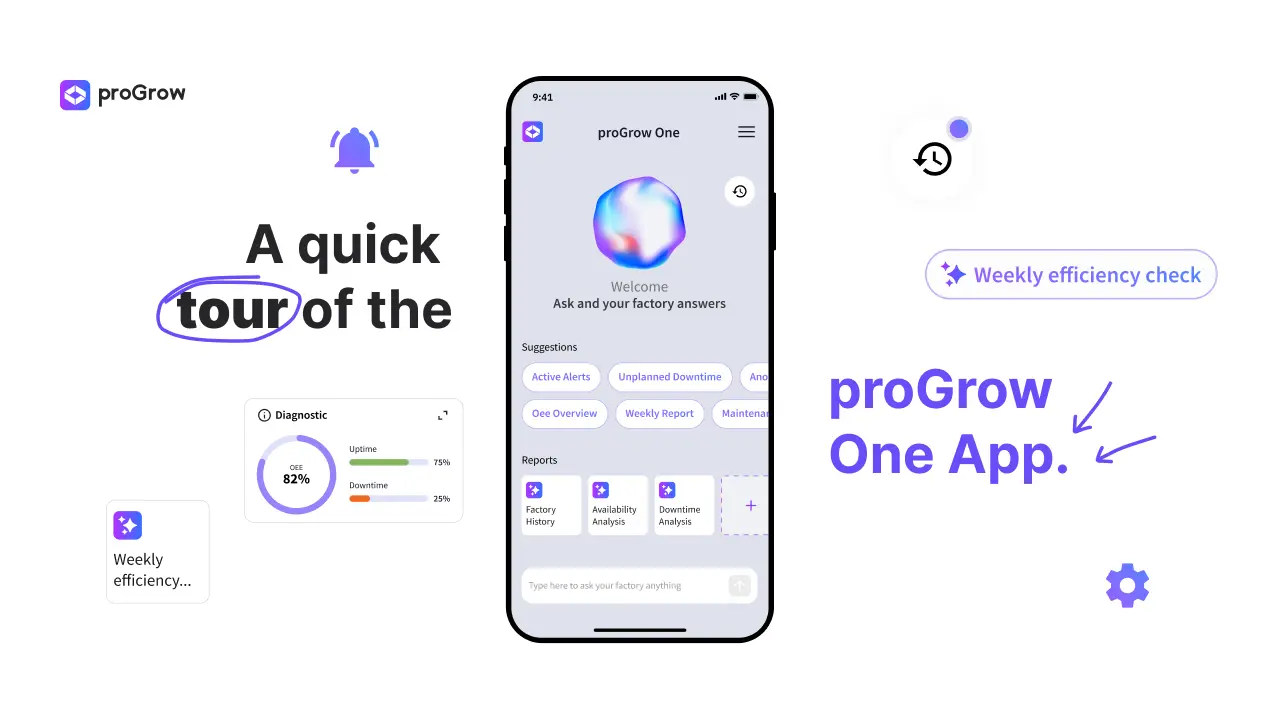
A quick tour of the proGrow One App
Learn how the proGrow One App digitalizes your factory, offering real-time OEE tracking, machine monitoring, and AI insights.