.webp)
From Zero to Textile
with Pedro Pinto



AI in Production & Automotive Competition
0:11
AI Tools for Daily Efficiency
1:05
Real-Time Data vs. Traditional Methods
2:03
IoT and Accurate Data Collection
4:25
Industrial Digital Transformation Challenges
6:21
Quality and Efficiency in Automotive
12:53
Generational Shift in Tech Management
17:57
Early Involvement in Family Business
22:15
AI-Driven Quality Control
24:07
Family Mentorship and Roles
26:00
Resilience Lessons from Previous Generations
30:18
Proving Value in Family Structures
33:06
Future Legacy and Business Continuity
35:22
Strategies for Successful Transitions
39:07
Career Advice and Personal Reflections
43:14
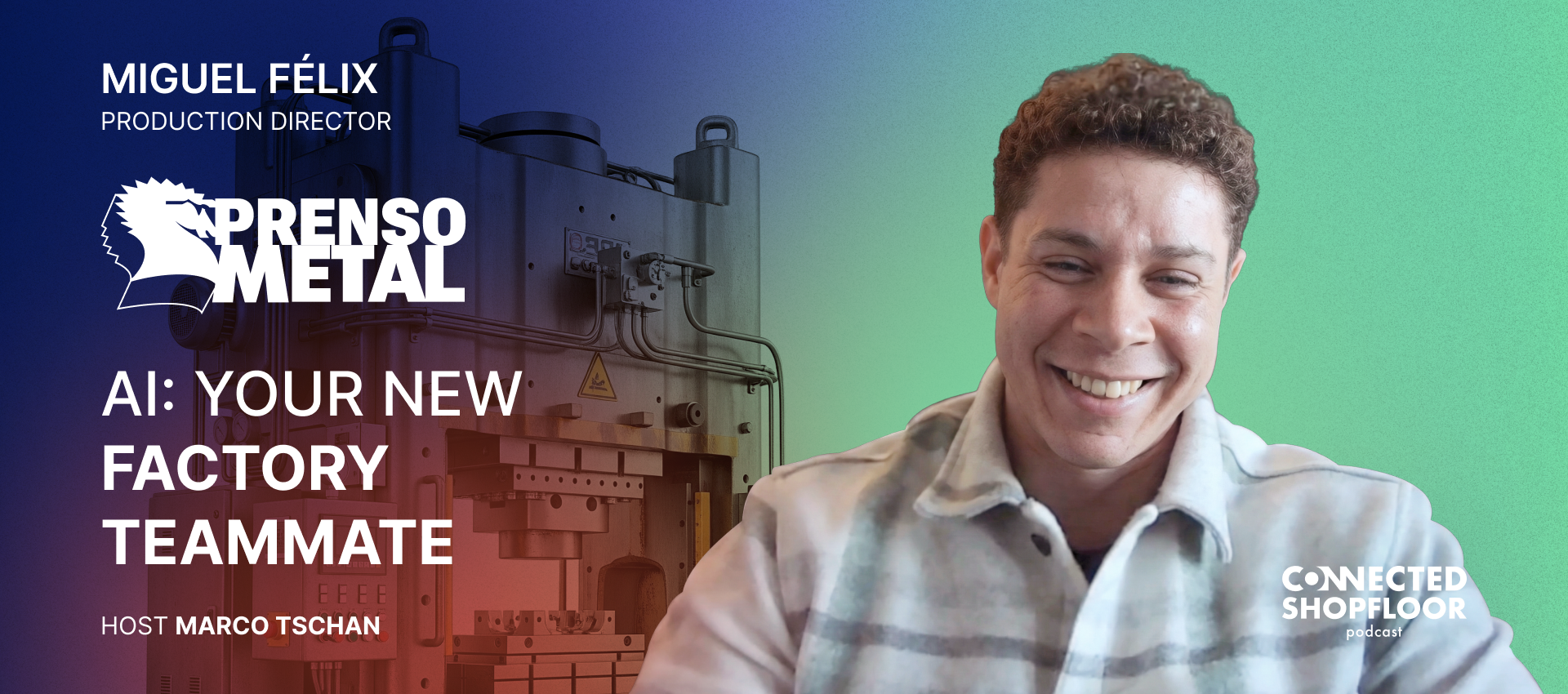
In this episode, we sit down with Miguel Félix, Production Director at Prenso-Metal, to explore the front lines of industrial transformation. From its roots in 1992 to becoming a Tier 1/Tier 2 powerhouse in the automotive sector, Prenso-Metal represents the pinnacle of Portuguese precision engineering.
With a background in International Trade and a Master’s in Business Management, Miguel brings a strategic perspective to the technical world of metal forming. He plays a pivotal role at Prenso-Metal, a company specializing in fine blanking, progressive stamping, and high-speed welding for the global automotive industry.
We dive into how AI and IoT are moving from buzzwords to the factory floor, revolutionizing the way production is managed in real-time. Miguel breaks down how digital tools are the secret to cutting delays and costs, providing a practical roadmap for innovation in an industry that’s traditionally been a bit more conservative. We also talk about the "balancing act"— keeping quality and speed high while navigating the red tape and cultural barriers that often slow down new tech.
But it’s not just about the machines. We get into the human side of manufacturing, with Miguel sharing raw insights on leadership, resilience, and staying authentic. We explore what it’s really like to manage generational shifts and family dynamics in a 100% Portuguese-capital business, and how European manufacturers can stay ahead of the curve when competing with Asian markets through smart innovation and vertical integration.
"We can't compete with markets like the Asian market in terms of cheaper products because we will never be able to have the costs that these kinds of markets have.”